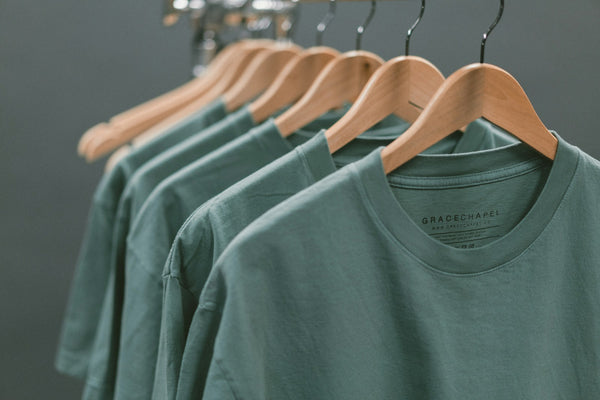
Starting a clothing brand is easier when you treat it as a sequence of decisions rather than one enormous launch. The strongest first collections are usually focused: a clear customer, a small product range and a production plan that protects cash.
1. Define your customer and positioning
Write down who the product is for, what problem it solves and why somebody should choose it over an established alternative. “Premium streetwear” is too broad. “Heavyweight, understated streetwear for UK creatives who prefer relaxed fits” gives you direction on fabric, fit, imagery and price.
2. Build a focused first collection
Start with one to three related styles. Fewer styles let you spend more attention on fit, materials and quality control while keeping the minimum order manageable.
| Launch approach | Advantages | Main risk |
|---|---|---|
| One hero product | Simple message and lower development cost | Less choice for customers |
| Small capsule | Stronger brand story and outfit potential | More samples and inventory |
| Large collection | Broad market coverage | High cash and quality-control risk |
3. Create a commercial plan
Estimate landed cost, selling price, packaging, payment fees, returns and marketing before committing to production. A healthy margin needs to cover more than the factory invoice.
4. Prepare a tech pack
Your tech pack should include technical drawings, measurements, fabric composition and weight, colour references, trims, artwork placement, labels and packaging. Clear specifications reduce assumptions and sample revisions. Read our tech pack guide for a complete checklist.
5. Shortlist manufacturers
Ask potential suppliers about product specialism, minimum order quantity, sampling charges, production lead time, quality checks, payment terms and shipping. Share the same specification with each supplier so quotations are comparable.
6. Develop and approve samples
A sample is a working prototype, not a formality. Test fit on the intended customer, wash the garment, inspect stitching and confirm artwork dimensions. Record every revision in writing.
7. Place a controlled production order
Confirm an approved sample, size breakdown, colour quantities, packaging, delivery address and quality standard before paying the production deposit. Ask for progress checkpoints and final inspection evidence.
8. Prepare the launch before stock arrives
Create product photography, size guidance, product descriptions, email content and customer-service policies while production is underway. Build a waitlist and explain what makes the product distinctive.
Simple launch checklist
- Target customer and positioning defined
- Product specification and tech pack complete
- Sample tested and approved
- Landed cost and retail margin confirmed
- Production and delivery dates documented
- Photography, website and launch campaign ready
Need help turning your concept into a manufacturable collection? Request a quote from Florix Sports and share your product, quantity and branding requirements.
Frequently asked questions about starting a clothing brand
How much money do I need to start a clothing brand?
The budget depends on product complexity, sample rounds, order quantity, packaging and marketing. Build a cost plan around landed cost rather than factory price alone, and keep contingency for revisions and freight.
Can I start a clothing brand with a low MOQ?
Yes. A focused capsule with fewer styles and colours can work at a lower minimum order quantity. Concentrating units normally gives better control than spreading a small budget across many products.
Do I need a tech pack before contacting a manufacturer?
A complete tech pack improves quotation accuracy, but reference garments, sketches and measurements can start an early discussion. Final sampling should use documented specifications.
How long does clothing production take?
Allow time for specifications, sourcing, sampling, revisions, bulk production, inspection and shipping. The exact timeline depends on materials and complexity, so confirm milestones with the manufacturer before planning a launch date.